
The approach
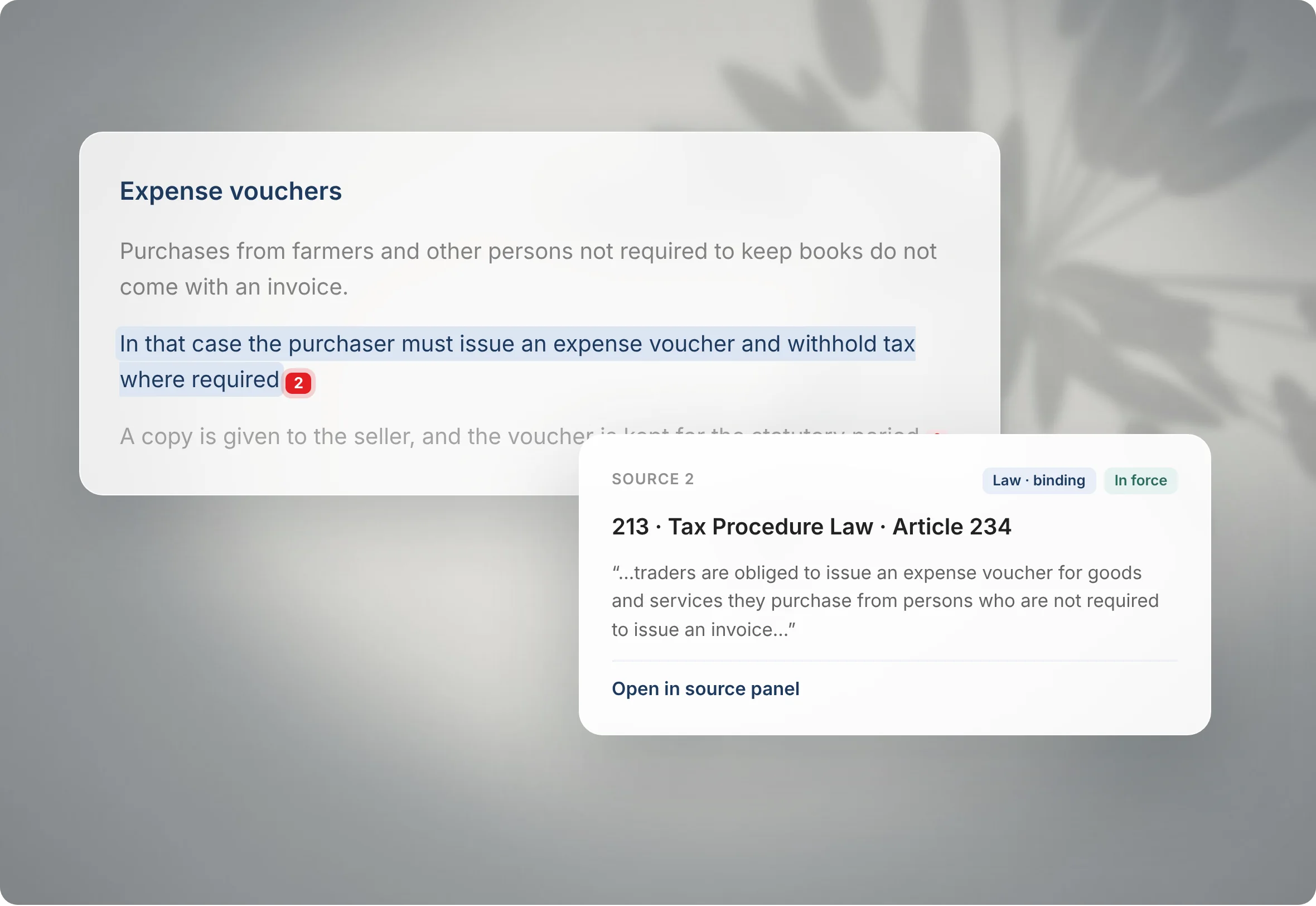
Citations are attached to each material proposition, not appended as a reading list at the end. Each linked reference opens the source in a side-by-side panel with the relevant passage highlighted.
Each citation is tagged with its source type, so you immediately know the weight of what you are reading: a statutory article is a binding rule, an administrative ruling is the authority’s position and persuasive but not binding, a court decision is judicial precedent.
This changes the review economics of the work. Instead of re-researching an answer to confirm it, you audit it.
How it works
Every claim, one click from its source
- Step 1
Grounded generation
The model may only assert what the retrieved passages support, and unsupported propositions are flagged rather than smoothed over.
- Step 2
Labelled citations
Each citation renders with its category label, article number, publication reference, and date.
- Step 3
Sources open in place
The cited text is highlighted in context, so you can read the surrounding provisions.
- Step 4
Citations carry through
Citations flow into every generated document, so the memorandum you send to a client is footnoted, not just fluent.
Every legal proposition, checked against its source in one click.