
The approach
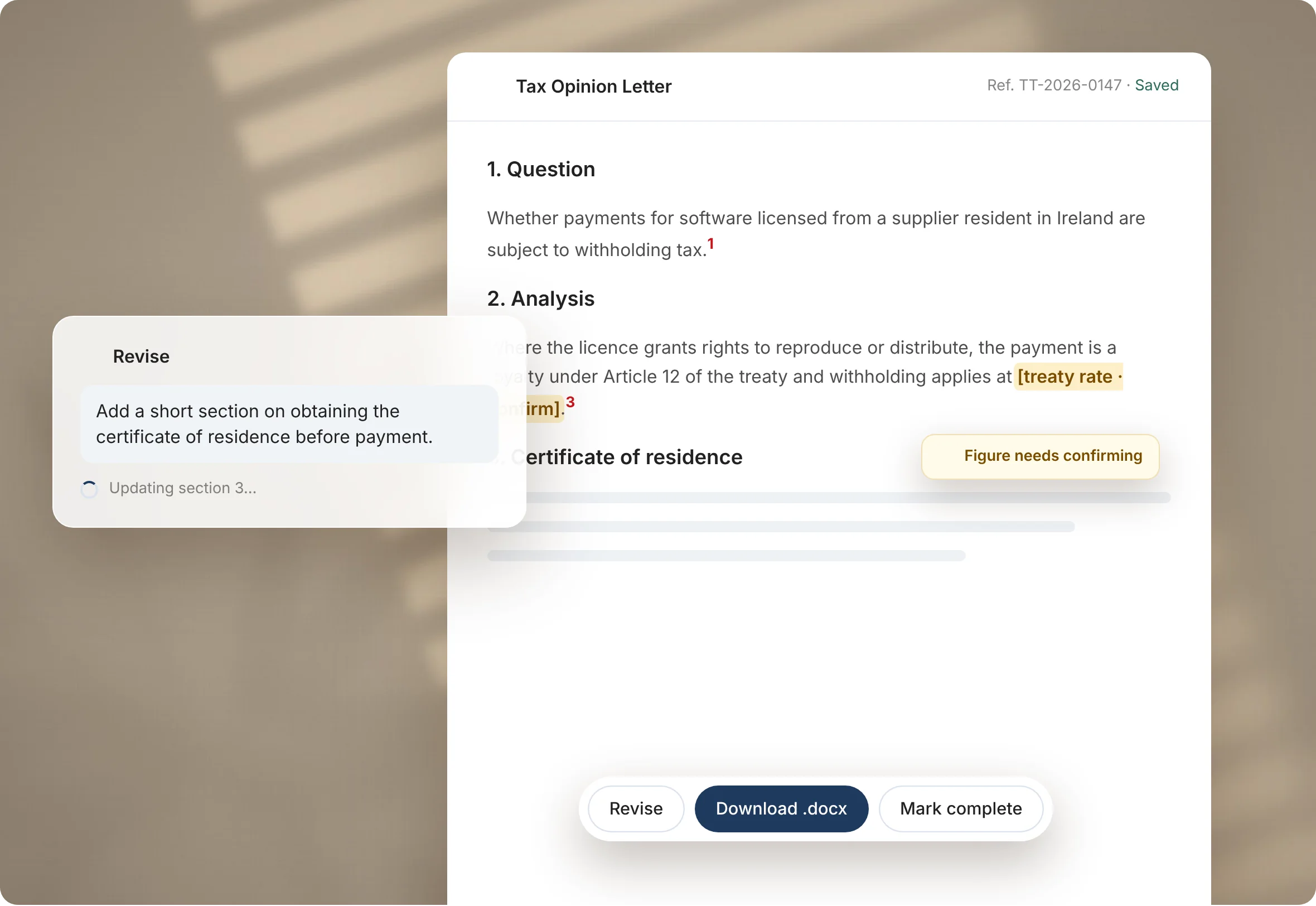
Any session converts into a structured draft: a technical memorandum, a formal legal opinion, a client bulletin, or a client email reply. Each output type follows its own structure and register. The memorandum is long-form and fully cited. The bulletin is written for a non-specialist reader. The email reply is short and answers the question that was actually asked.
Structure is enforced rather than left to the model’s discretion. Every memorandum works through characterisation, the applicable tax headings, the reporting and documentation obligations, the risks with a concrete recommendation against each, and a closing list of points requiring confirmation.
That last section is what makes the output ready for professional review.
How it works
Structured drafts, footnoted from the start
- Step 1
Six output types
Memorandum, legal opinion, tax report, client bulletin, email reply and tax guidelines, each with a fixed skeleton and its own tone.
- Step 2
Footnotes, automatically
Citations from the session carry into the document as footnotes.
- Step 3
Templates for firms
Taxtune templates of outputs are readily available for firms delivering to their own clients.
- Step 4
Word or PDF export
Ready to send or ready to edit.
A drafting task that normally starts from a blank page starts instead from a structured, cited draft, reviewed rather than written. Junior output reaches senior-level structure and becomes ready for the review of a tax expert.